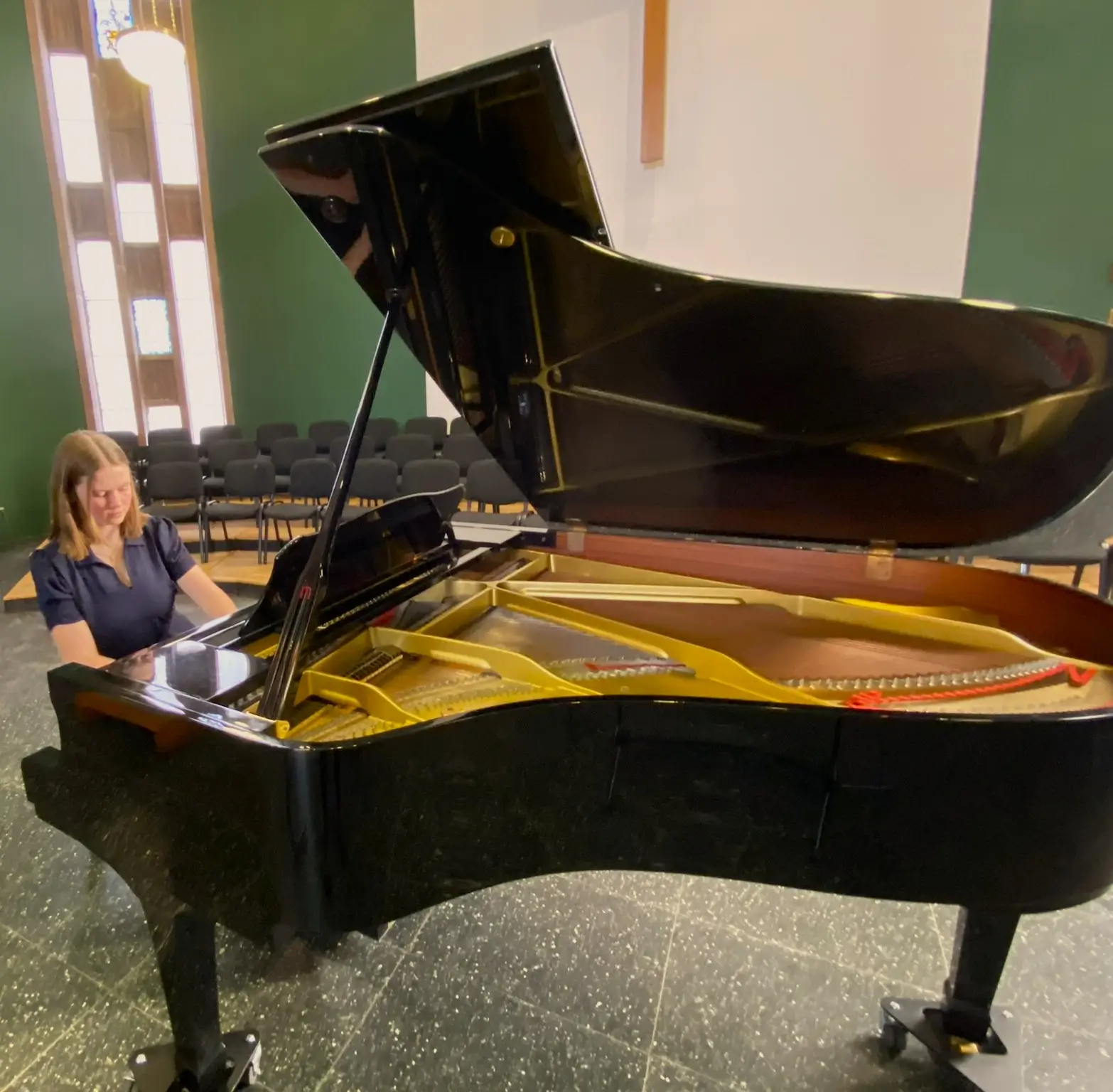

My student Freya Terris, 17, has become the first pianist to achieve ABRSM Grade 8 performing with the left hand alone. Grade 8 is the board's highest graded level, and Freya achieved it with Distinction. Two years ago, after a long-term injury and surgery to her right hand, she did not know whether she would ever play the piano again. On 25 January 2026 she recorded her Grade 8 assessment for the Associated Board of the Royal Schools of Music, and the result earned her, as the board itself put it, "a little place in history."
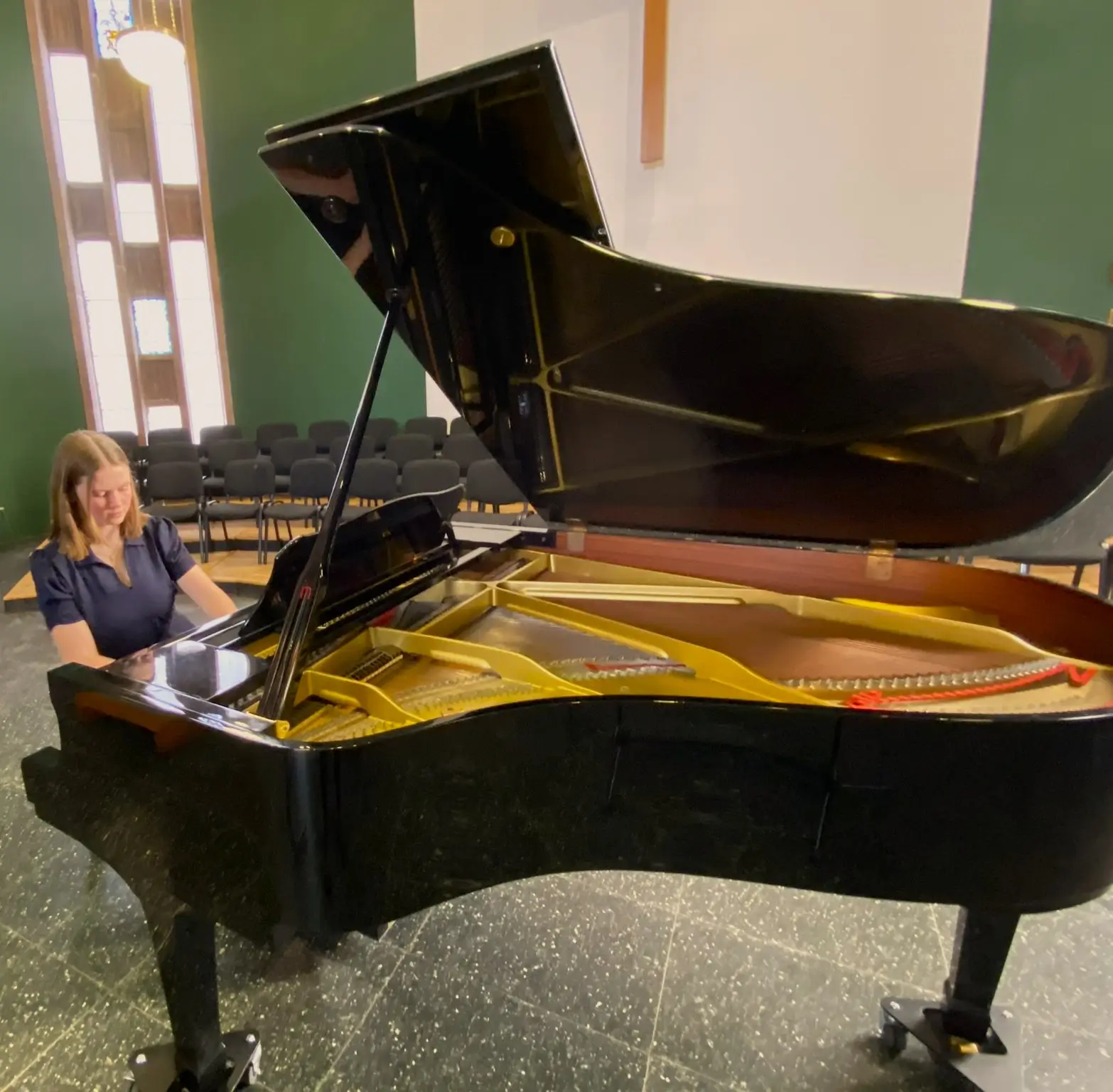
A World First in ABRSM's 137-Year History
Founded in 1889 and operating in over 90 countries, the ABRSM has assessed generations of musicians for more than a century. To the board's knowledge, Freya is the first candidate ever to pass Grade 8 piano playing repertoire written for one hand. When her result came through, the ABRSM wrote to her directly, telling her she now held a place in history as the first person to achieve Grade 8 as a one-handed pianist.
For the assessment, Freya performed a full Grade 8 program of works composed for the left hand alone — Moszkowski's Étude for the Left Hand No. 8, Reger's Romanze, Bowen's Nocturne, and Adlam's Triumph — held to the same standard as every Grade 8 candidate. The examiner's report speaks for itself, noting that she "played with involvement and commitment throughout this varied programme", and singled out the closing piece, in which "the joyful and vibrant mood was convincingly portrayed." Of her performance as a whole, the examiner's verdict was simple: the program closed atmospherically, and — in two final words — "Well played!"
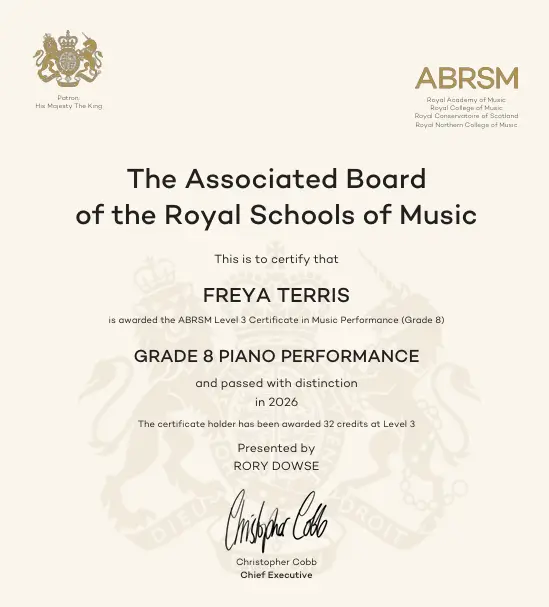
An Injury, and the Decision to Begin Again
Freya had played the piano almost every day since the age of four. By her early teens it had become, in her words, "quite a defining part of my identity — many people knew me through my piano." So when a long-term injury began to make playing painful, her first instinct was not to stop but to hide it. "I'd ignored and hidden the developing pain for almost eight months before finally conceding there was something wrong," she told me, "all because I didn't want to give it up."
When she could no longer play with her right hand, the loss was palpable. "It felt bizarre not to have that outlet anymore," she said. The hardest part, she explained, was not relearning the instrument but the music itself: "It's an odd feeling to look back on the things you played aged thirteen or fourteen, and now, instead of getting better with time, be unable to play any of it."
The technical reality was daunting, too. For almost any pianist the left hand is the weaker of the two, and that imbalance became immediately clear. Over 2024 and 2025, working through her recovery, Freya rebuilt her technique from the foundations until she could once again play at the level she had reached before. In all my teaching, I've rarely seen that kind of patience.
The Left-Hand Tradition: Wittgenstein, Fleisher, and McCarthy
Freya now joins a small and remarkable lineage. The Austrian pianist Paul Wittgenstein (1887–1961), who lost his right arm in the First World War, commissioned a body of left-hand works that includes Ravel's Piano Concerto for the Left Hand — still one of the cornerstones of the repertoire. The American pianist Leon Fleisher (1928–2020) lost the use of his right hand to focal dystonia at the height of his career and built an acclaimed second life around the left-hand literature. The British pianist Nicholas McCarthy (b. 1989), born without a right hand, became the first one-handed pianist to graduate from the Royal College of Music.
What sets Freya apart is that she stands in this tradition, and also that her path helped open a door in the graded-exam system that these pianists never had.
How the Grade 8 Came About
Months before the ABRSM's one-hand repertoire for Grades 1 to 5 went live, Freya had already written to the board to ask whether a Grade 8 exam might be possible — whether through left-hand arrangements of existing syllabus pieces or through works written specifically for a one-handed performer.
The response, she is quick to stress, was nothing but encouraging. "There was virtually no persuasion needed," she said. "They were just as committed and willing to make this work as I was." As it turned out, the ABRSM was already developing its lower-grade single-handed exams when she made contact; what her inquiry showed was that there was genuine appetite at the higher grades, too. "I'm glad I was able to show them there was an interest," she said.
It took just over a year — slowed by her recovery from surgery — to settle on a program, and she recorded the exam in January 2026. She had always assumed she would reach Grade 8 eventually. "It was the realisation that I would likely never reach that milestone, and discussions with my teacher, that led me to get in contact with the ABRSM to see if they could help make it possible," she says. "If you don't ask, you don't get."
"If you don't ask, you don't get."
When the result arrived, she was at school. "I got it last period, in private study," Freya recalled. "I remember just staring at my laptop reading the examiner's comments, not quite believing it was real." Freya is, she says, "hugely grateful to the ABRSM and to my teacher for facilitating this, but also to those — namely my parents and my music teachers in school — who encouraged me to keep going despite the difficulties of the past few years."
A New Path for One-Handed Pianists
On 4 June 2026 the ABRSM announced its 2027–28 piano syllabus, which for the first time included a dedicated list of piano music for one hand for Grades 1 to 8, offered as an additional choice alongside the standard repertoire lists. For the first time in the board's history, pianists at every level who play with one hand can work toward a recognized graded qualification.
The practical effect is real. ABRSM grades carry international recognition, and the higher grades open doors in college applications and beyond. The deeper point is simpler: a route that was effectively closed is now open. Freya's own advice to other one-handed pianists is characteristically forward-thinking — and aimed at all players: "Go for it. More than that, I think any pianist taking a performance exam should at least consider a single-handed piece. It's a great way to build technique, and to discover some really unique pieces you'd otherwise never come across."
Listen: Scriabin, Nocturne for the Left Hand, Op. 9 No. 2
Recorded at her NI Young Musician final, this is Scriabin's Nocturne for the Left Hand — a work that requires a single hand to carry melody, harmony, and accompaniment at once.
Freya was hailed as a "pioneer" by the Northern Ireland Young Musician Competition in 2025, and earlier this year she gave a keynote talk at Belfast's Waterfront Hall on her injury and her music. In 2022, she performed a piano solo at the Ulster Hall, Belfast, to an audience of around a thousand.
Freya has taken her piano lessons online from Lisburn, Northern Ireland, since 2020. She is now applying to study music at university in the UK.
Her achievement would stand on its own merits as a world first. The fact that it has also helped widen the path for pianists who come after her is extraordinary.