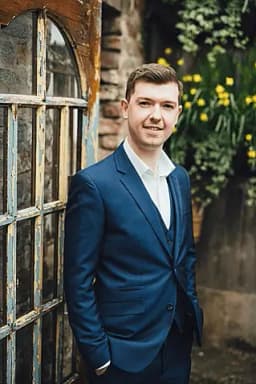

On Monday, November 10, 2025, I received an unexpected call. It was from a member of the Scottsdale Symphonic Orchestra. I had attended their chamber music concert at Steinway Hall just a few days earlier and had met some members of the orchestra. The Personnel Director, Adam Schay, was one of the members, and he was calling to ask if I would be interested in playing orchestral piano for their upcoming concert.
The concert was part of their season, "The American Journey: Struggle, Spirit, and Triumph", marking America's 250th anniversary. This particular concert included works by Alan Menken, Offenbach, Wagner, and John Williams. It was to be held at Scottsdale Center for the Performing Arts. I had previously reviewed the orchestra's Mother's Day Concert from last season, had been working with the orchestra's President Denise Wilson, and had been invited to play at the chamber music series. Playing with the orchestra felt like the next step.
It had been a number of years since I had played in an orchestra. I had played orchestral piano in music college and in youth orchestras growing up – though usually leading the cello section for the latter – and I wanted to make sure I was ready for the first rehearsal. Adam promptly sent the music, and I began practicing. I started the music on Tuesday of the same week, and the rehearsal was on Thursday - I had just two days to prepare. The responsibilities of my external Music Director position meant balancing conducting, practicing, teaching, and administrative tasks along with working on the orchestral piano music. The week of the performance included three performances and three rehearsals, so I had to be extra focused in my preparation to ensure I gave quality performances.
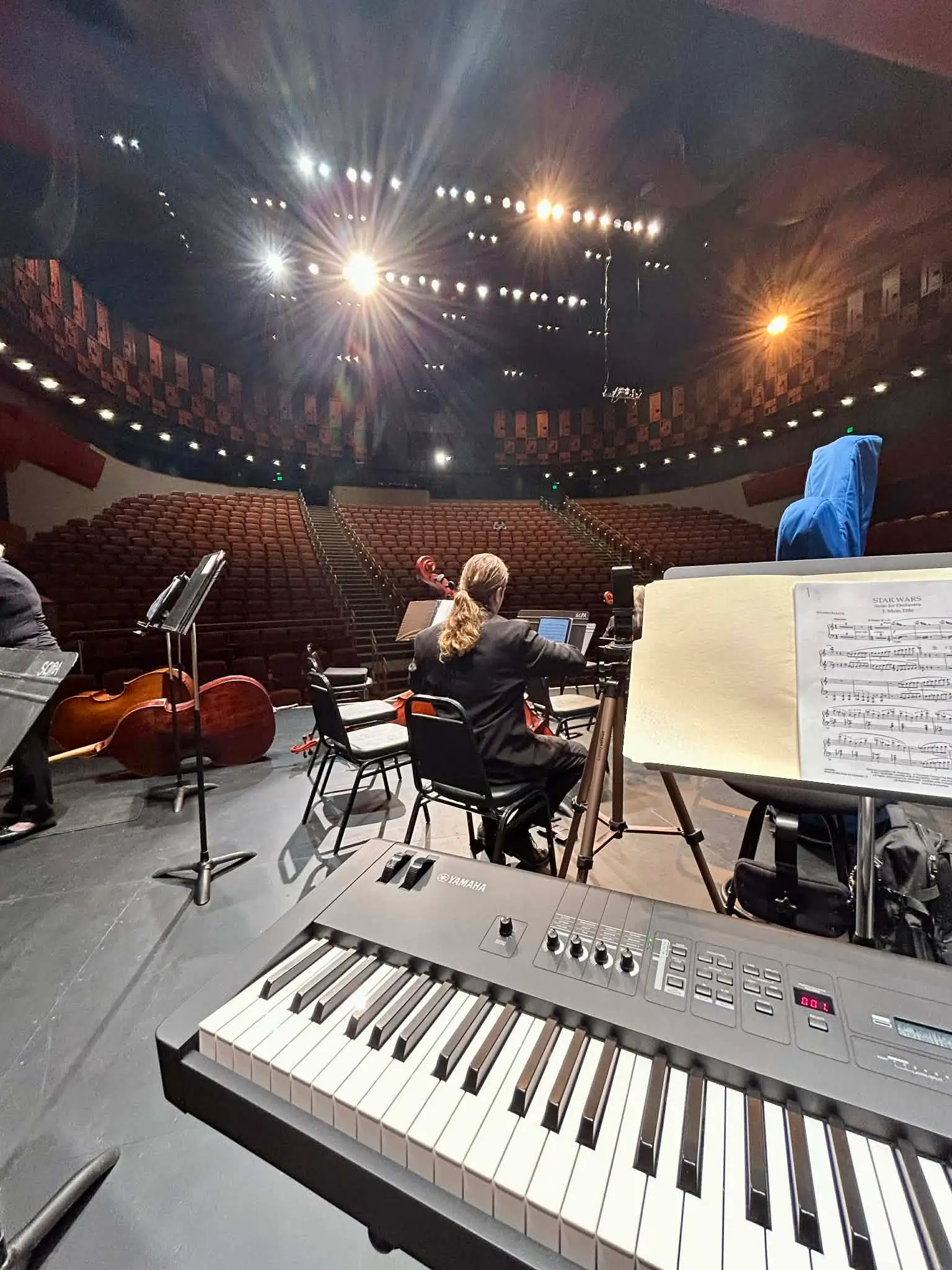
I arrived at the first rehearsal and was excited to play and discover the orchestra's sound and way of rehearsing. The mood was low key but disciplined and focused, which suited me perfectly. Rob Wilson set up the keyboard and showed me the ropes (thanks, Rob!). It was an amplified keyboard, which meant getting used to changing the sound from piano to celeste, getting a feel for the tone of the instrument across its range, and adjusting the volume to blend with the orchestra. I wanted to be sensitive since I was playing with a new ensemble – listening and responding more than playing out. I was encouraged by the orchestra's President to increase the volume in the second rehearsal, which was ideal.
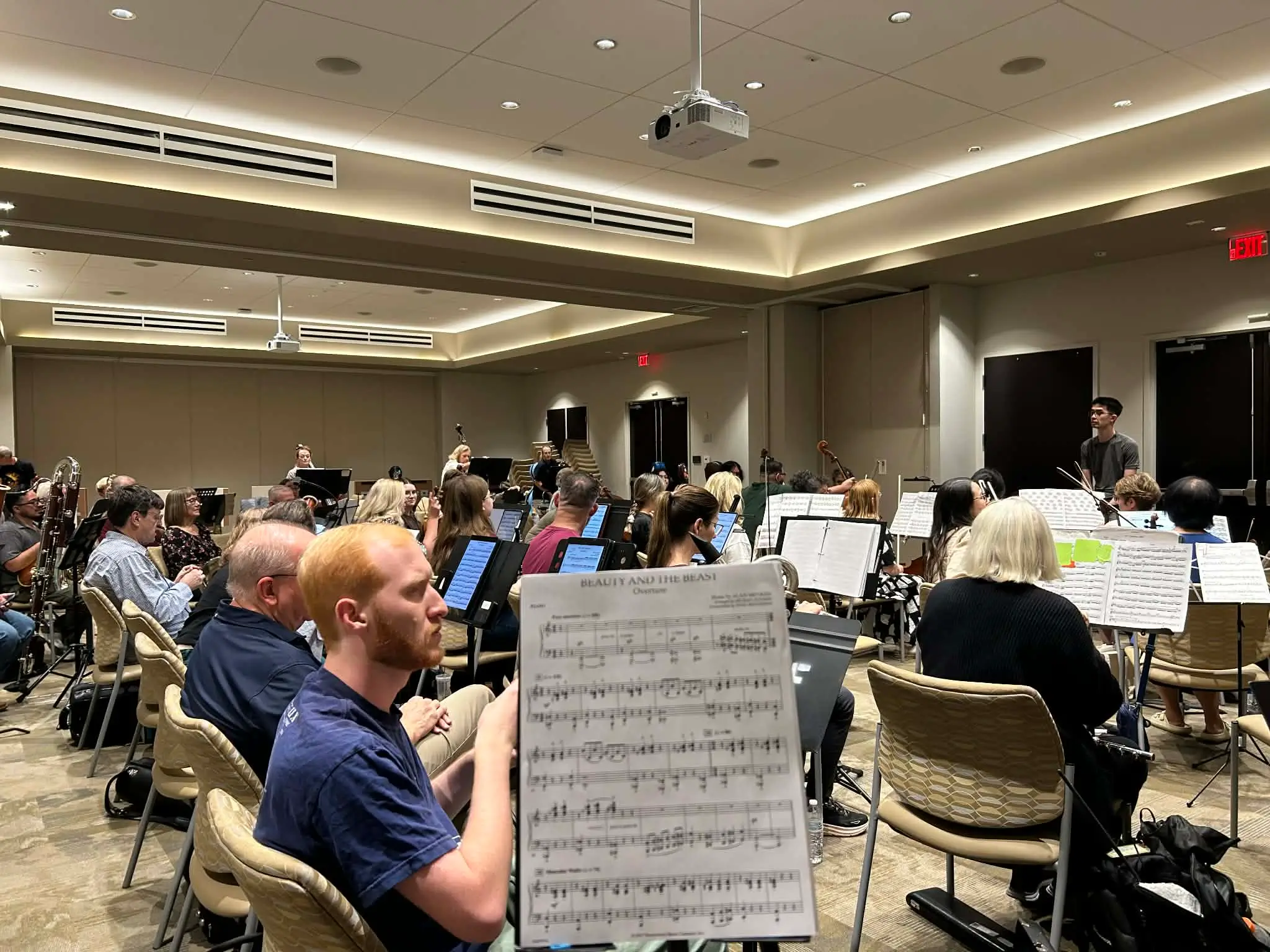
The main challenge was keeping count of the tacet (or "silent") measures. Having played in orchestras growing up, I was used to this – though cellos tend to play more often than the orchestral piano – so my job was more like a percussionist who waits many measures for their entry and then needs to play very precisely for short bursts. My part often added timbre to the flute section, brass section, and harp. The pairing with these sections felt more varied than I remember as a cellist, and as pianists we're often emulating orchestral sounds to bring the instrument to life. Playing with the orchestra meant playing along with instruments for real, and this was one of the most enjoyable aspects of the rehearsal. It was also great meeting the musicians, including Music Director Desmond Siu and Concertmaster Joshua Facello.
"Playing with the orchestra meant playing along with instruments for real, and this was one of the most enjoyable aspects of the rehearsal."
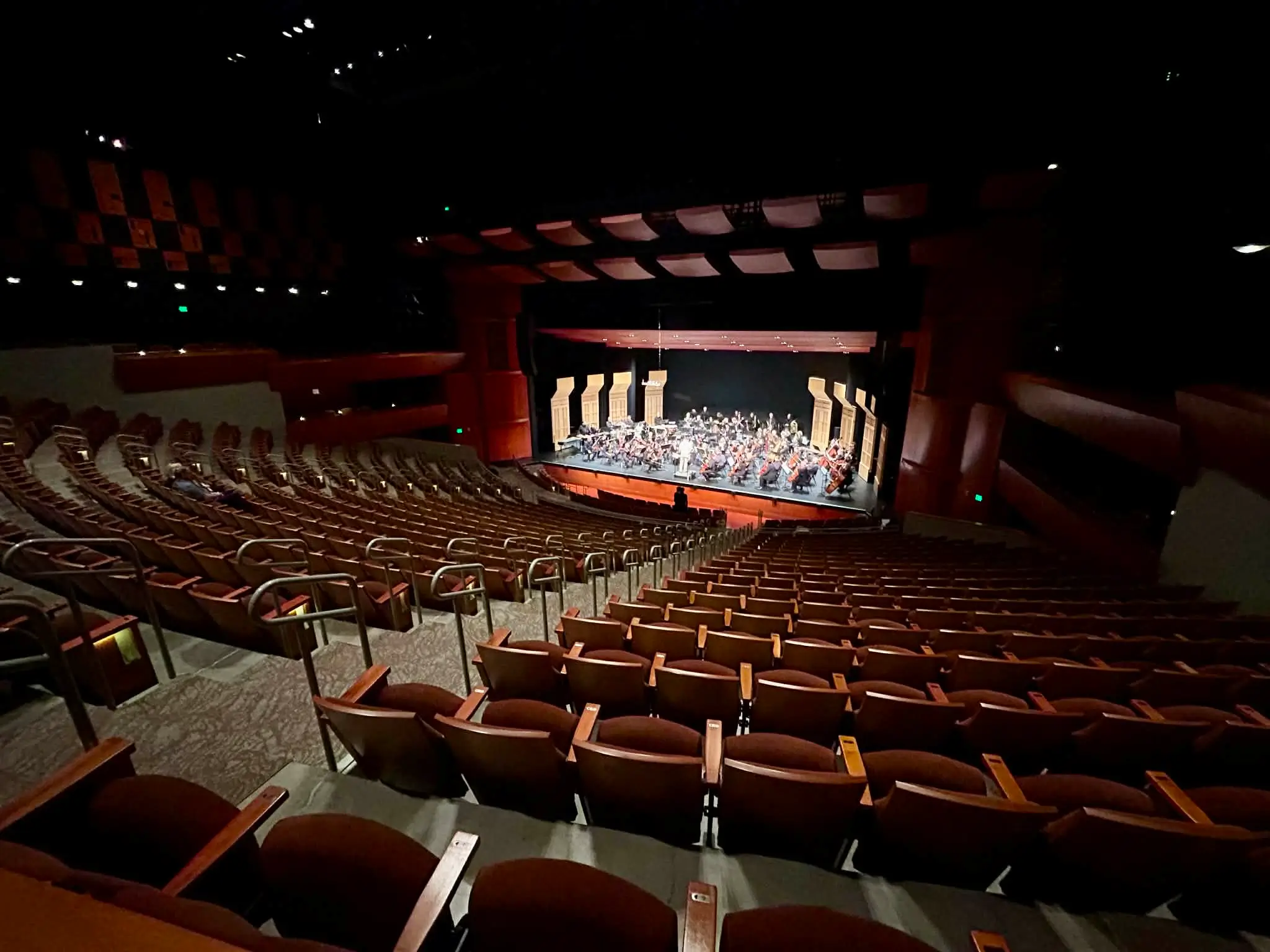
After two rehearsals, it was performance day. I finished another performance across town and headed home to rest for a few minutes and to get ready. I normally perform in a suit, though the concert attire required a black shirt and tie. I'd managed to get these the day before after visiting more than a few stores (thank goodness for Target)! I had invited family, friends, students, and colleagues, and it was great to see such a strong turnout. The hall seemed close to capacity from what I could tell on stage. This was the first orchestral concert for several of my students. One came on stage just before the concert and played Burgmüller's Arabesque and met the orchestra's President.
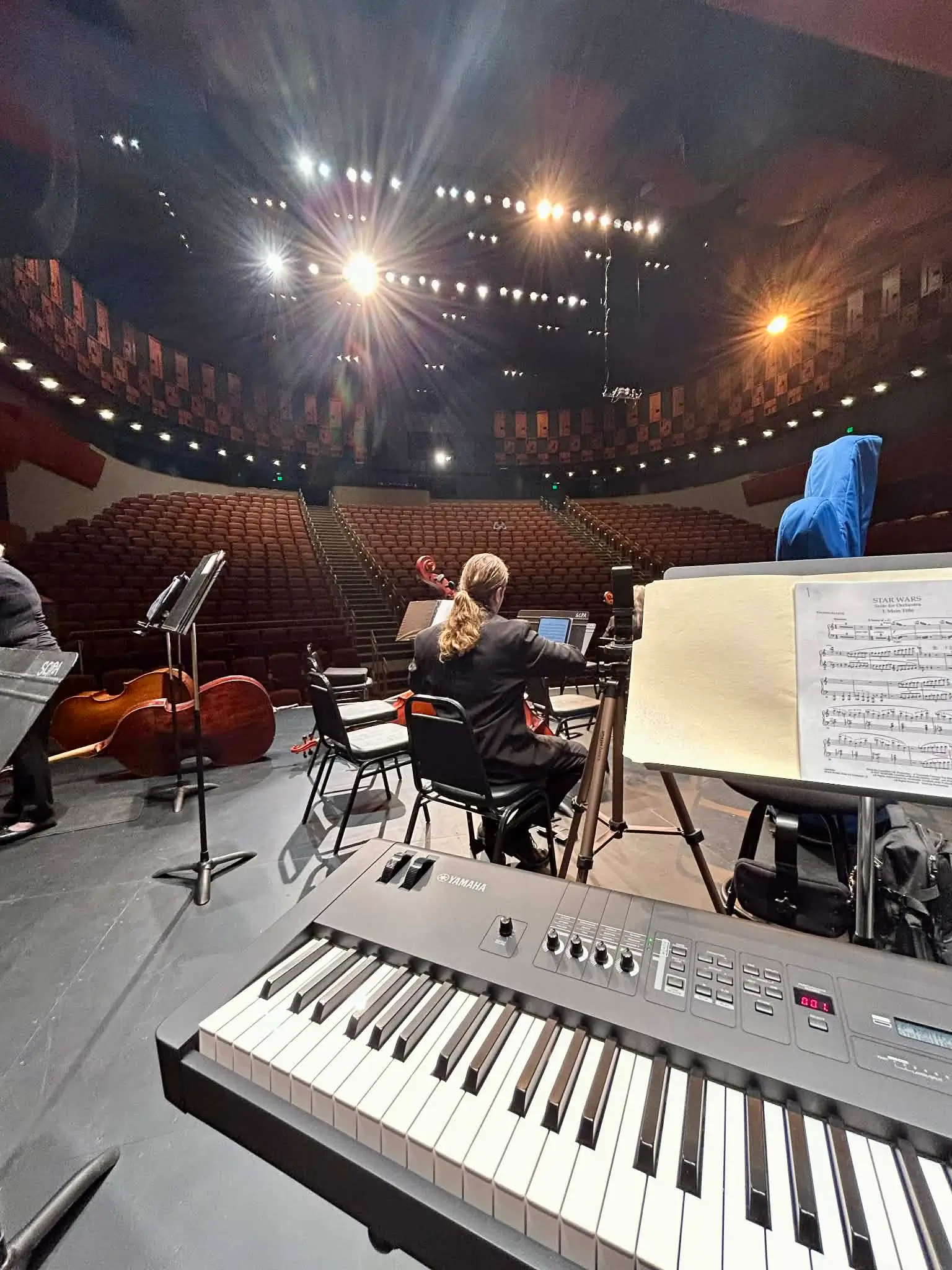
The performance felt extremely focused and polished under the baton of Guest Conductor Daren Weissfisch. The woodwind playing was very clean and poised during Nimbus 2000, the brass were full and rich during Star Wars, and the string solos had strong intonation in the Offenbach. It was wonderful to see how the concert environment brought everyone together and encouraged them to play at such a high level.
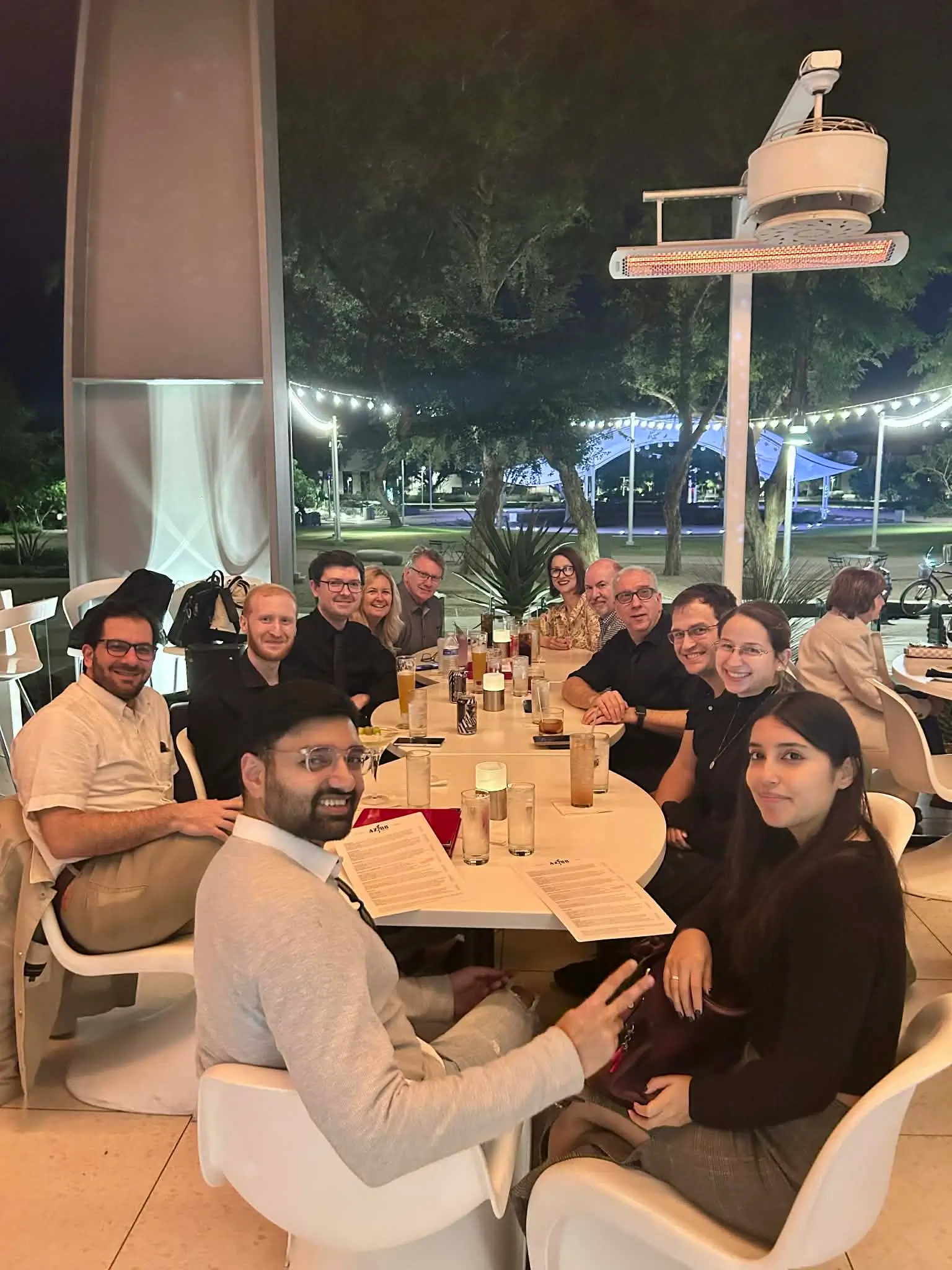
After the performance we went to AZ88 – a contemporary bar located opposite the Scottsdale Center for the Performing Arts. I love this part of town – its compact center reminds me of a European town, but with the modern feel of a newer American city. This was a highlight – sharing a meal with friends and colleagues, sharing stories and insights, and catching up with each other. It was nice to let our hair down after a demanding week, and to ride the energy of the concert. I especially appreciated speaking with the Guest Conductor about conducting and playing piano in orchestral settings, as well as getting feedback about my timbre and balance. I was grateful when the orchestra's President invited me to perform at the next concert, "Holiday Traditions and Togetherness," on Sunday, December 14, 2025.
What impressed me most about this orchestra is that they were only established in 2023 and have already formed a reputation as one of the highest-level orchestras in the valley. Their creative programming as well as their fresh artistic direction probably has a lot to do with it. If you're seeking an energizing musical event in Phoenix, I'd recommend attending their concerts in the coming weeks and months.